Heavy Rain lead designer (?) David Cage on the UI of the game:
I was always a little bit frustrated with the interface because I thought it was a little bit old fashioned. This idea of having a 3D environment with glass on the top with symbols, and when you want to know how to interact with it you need to look at the symbols, look at what you need to do. "OK. I need to do this in order to interact with that."
It was silly in a way. So I wanted to find a solution. It is funny because you were talking about inspiration, to be honest with you, it came from Fight Club. There is this scene in Fight Club with the IKEA furniture and stuff, and everyone was so amazed when they saw that movie and said, "Wow, that is so cool!"
We wanted to find a solution. I thought again about Fight Club and I thought that this could be the solution. We wanted to find something that would be clear but that would not interfere with the environment. So that was difficult. We made many tests, but we are quite happy with the results.
http://www.joystiq.com/2009/05/27/interview-david-cage-of-quantic-dream-and-heavy-rain/
Tuesday, June 16, 2009

Wednesday, June 3, 2009
Week Summary: 18/5 - 22/5 + 25/5 - 29/5
After two weeks absence, it's time for a return of the week review! The last two weeks have been quite busy. We've finally finished the last user test, and a first version analysis of the results can be found here in the blog. Last week was spent in stockholm taking part in some user tests at DICE and interviewing various employees at the company about the role of the UI designer, done in order to shape our guidelines in the best way possible. This was quite rewarding for us.
This week, we're looking at the guidelines and we've already got a rough outline for them. On friday we will meet Staffan to discuss this and the report. Looking forward, the coming weeks will be quite documentation-heavy, which might result in less activity blog-wise than before.
Over and out.
This week, we're looking at the guidelines and we've already got a rough outline for them. On friday we will meet Staffan to discuss this and the report. Looking forward, the coming weeks will be quite documentation-heavy, which might result in less activity blog-wise than before.
Over and out.
Splinter Cell takes the UI into the 3D geometry
Time for another upcoming game that explores the possibilities of putting the UI inside the game world. Tom Clancy's Splinter Cell: Convinction (phew) briefs the player through the missions and partly tells the narrative by projecting text and moving pictures onto not only walls and floors, but also on the characters if they happen to be in the way (like if a person would stand between a projector and it's surface).


Yet another interesting design choice and quite artsy, with the projector effect breaking the wall between what is diegetic and what is not. I'm not sure if I dig it from an immersion point of view though. Gameplay video can be found at http://www.gamersyde.com/stream_11254_en.html
Update: Interview with the creative director, quite interesting as he, among other things, uses the term "breaking the fourth wall".
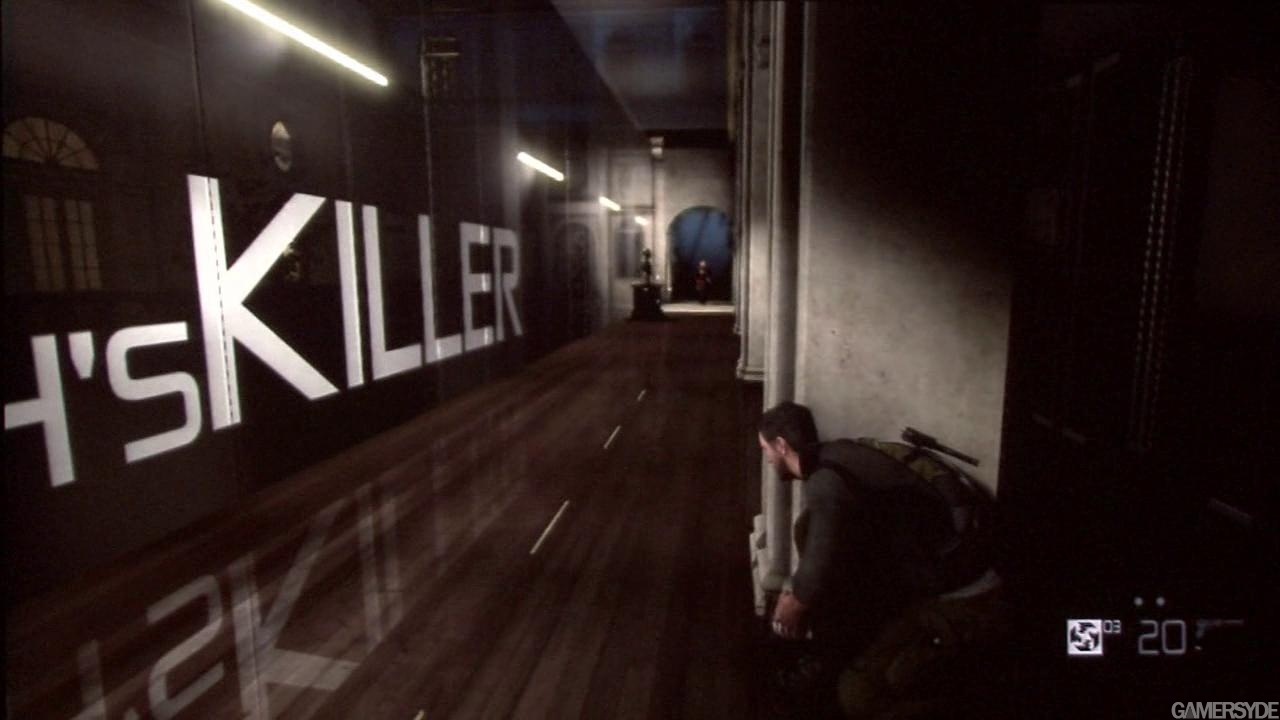
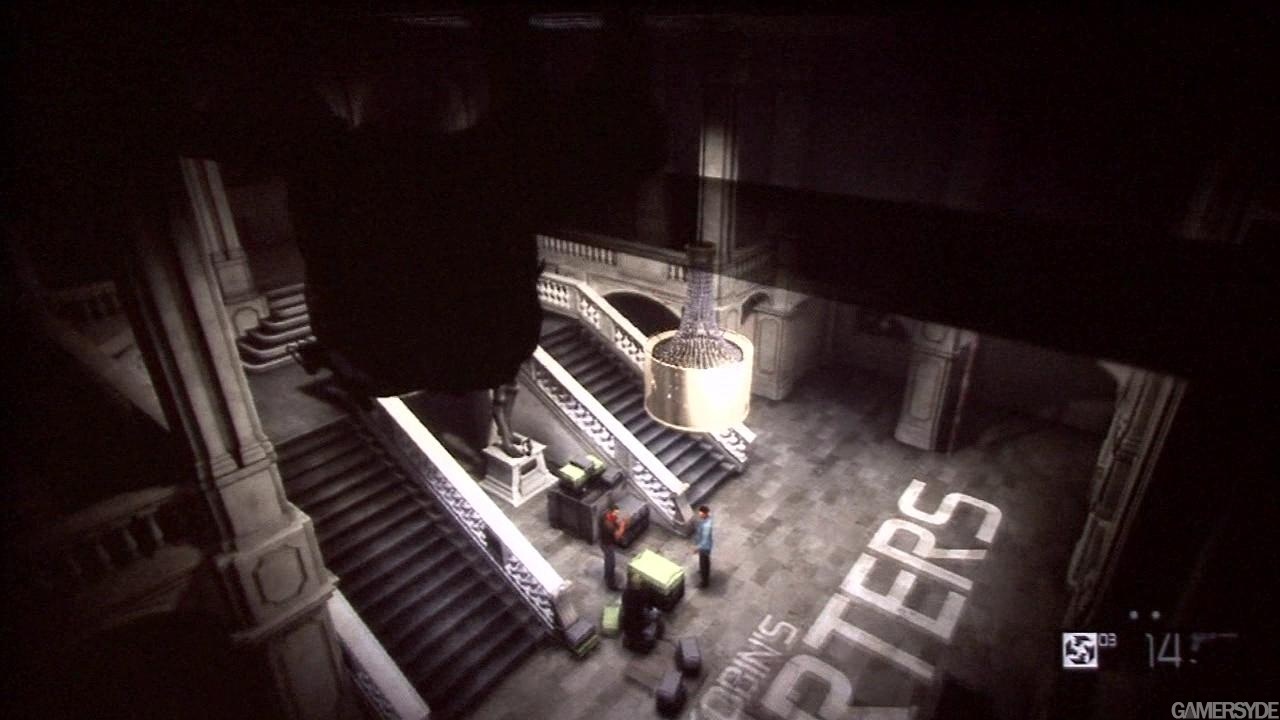
Yet another interesting design choice and quite artsy, with the projector effect breaking the wall between what is diegetic and what is not. I'm not sure if I dig it from an immersion point of view though. Gameplay video can be found at http://www.gamersyde.com/stream_11254_en.html
Update: Interview with the creative director, quite interesting as he, among other things, uses the term "breaking the fourth wall".
Tuesday, June 2, 2009
Features, Affordances and Signifiers
I'v read up on some HCI stuff and it seem like the general concensus in the HIC community is that:
A Feature is something that the application/game allows you to do. Let's say that the feature is that you can blow up some (but not all) barrels in a game, causing damage to nearby enemies.

An Affordance is the way you go about achieving/triggering the feature. In this case this is done by hitting the barrel with one of the weapons at your disposal. This affordance is both consistent with reality (this is how volotile cemicals actually behave under fire) and an often seen feature in action movies and games.
A Signifier is the way in which the player perceives that the feature/affordance exists. in the case of the explodable barrel this would be the red markings and the "FLAMMABLE" label. The signifier is what helps player destinguish between flammable and non-flammable barrels in the world.
A Feature is something that the application/game allows you to do. Let's say that the feature is that you can blow up some (but not all) barrels in a game, causing damage to nearby enemies.
An Affordance is the way you go about achieving/triggering the feature. In this case this is done by hitting the barrel with one of the weapons at your disposal. This affordance is both consistent with reality (this is how volotile cemicals actually behave under fire) and an often seen feature in action movies and games.
A Signifier is the way in which the player perceives that the feature/affordance exists. in the case of the explodable barrel this would be the red markings and the "FLAMMABLE" label. The signifier is what helps player destinguish between flammable and non-flammable barrels in the world.
Subscribe to:
Posts (Atom)